The Gear
Despite having some relative experience in planning due to our previous two tours, this one was at a different level. We had nearly a year to research and plan, as well as complete some test rides specifically as a preparation for our trip. In this section you might find inspiration for preparing for similar trips or specifically for the Divide. Every opinion or review about the gears is purely through my own experience. The only sponsorships we got for our trip were from Sigma Sports who provided us with our Universal Colours attire, and Styrkr who supplied us with some of the nutrition. Nothing else in this website is linked to any sponsorship.
Determinants
Safety. What could possibly go wrong and compromise our whole trip, and can we prepare for it within reason? Through research we considered a lot of crises, although we still could not anticipate everything, as one might expect. We spent an inordinate amount of time on getting the bikes just right, the camping equipment and the bike tools we needed to carry with us, along with the first aid kit, the electrical devices and how much power we would need to charge them. We even brought paper maps, in anticipation of not having any signal, although we also downloaded off-line maps, relevant manuals and PDF documents in advance, in case we needed to access them in the wilderness. Ultimately, we utilised the paper maps a few times, but we didn’t need to access any of the off-line stuff, as there was intermittent access to network signal throughout our adventure. We’re also pretty confident we were also ready for a battle-type of injuries, and bar carrying a whole bike frame as a back-up, we had anticipated most of mechanical issues that could have plagued us, including large enough tyre tears, that only a huge needle and thread could remedy it. Finally, we also visited Iceland’s relevant websites for safety, and acted upon their advice and requirements, all this, way in advance of our trip.
Feasibility. What is the lightest solution? What is the smallest in volume? Every little thing adds up, and considering we’d be carrying our stuff through hills and mountains and rivers and deserts, it all really mattered. At one point, I considered bringing a whole Sram gear system, ’cause i thought it might happened and we needed one. In another occasion, having our bollocks frozen during our first test ride in a field in New Forest UK, during a barely 7 degree night, I subsequently bought mini hot water bottles and hand warmers for our Iceland trip, before Josh talked some sense to me to not pack them. I am not saying they could not have helped, but something’s got to give. Conversely, we counted every gram when we were choosing a sleeping pad, and in hindsight, we both agreed we should have bought something more substantial. Some of our more consequential considerations included ultralight tent and titanium instead of aluminium camping equipment.
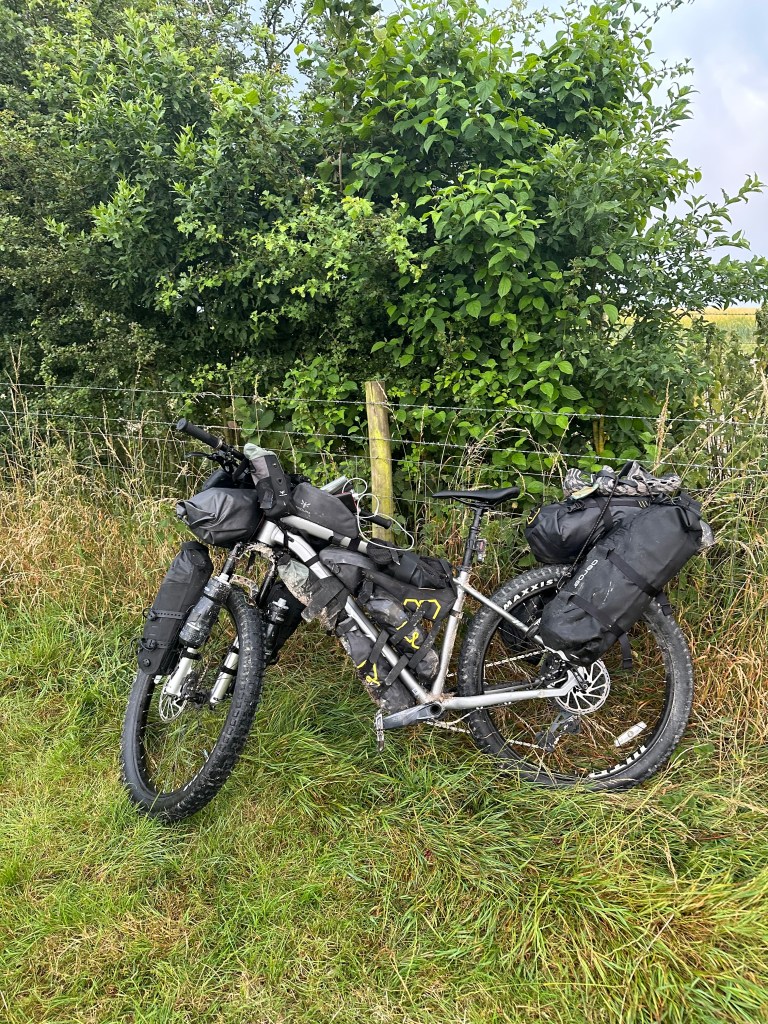
Practicality. Avoid unnecessary frustration with gears which when they add up during a long day’s ride, they might drive you mad, especially if one is impatient like me. Initially i planned to avoid paying £100 for a full frame bag by strapping 3-4 smaller Apidura ones which I already owned around the top and bottom tube. During our test ride in South Downs Way, I completely lost my mind from dealing with strapping/unstrapping the bags as I was trying to reach for things, but also shaping/reshaping them so the bags don’t get in the way, which they invariably did – sodding tetris game, during just one day’s ride. Our respective choices for our bag systems were different at the end, but we were both happy in terms of practicality.
Quality. There is no logic in buying cheap, if it bounds to break or does not do what is says on the package. Is it fully waterproof? Is it too bulky/heavy? Can you DYI things securely? Something’s got to give, surely, so one needs to choose wisely when you’re trying to cut costs.
Consistency. Josh and myself aimed to source and prep our stuff in similar ways, rather arrive in Iceland with markedly different bikes, or gear. This involved convincing each other of the merits of one idea over another. As an example, we argued the toss over the size of our tyres, considering that past riders used wildly different bikes, from normal gravel bikes to fat bikes. We also nearly relied on portable solar panel for power, but due to its awkward shape we opted for carrying more battery packs.

Highlights
Bike, cages and bags setting
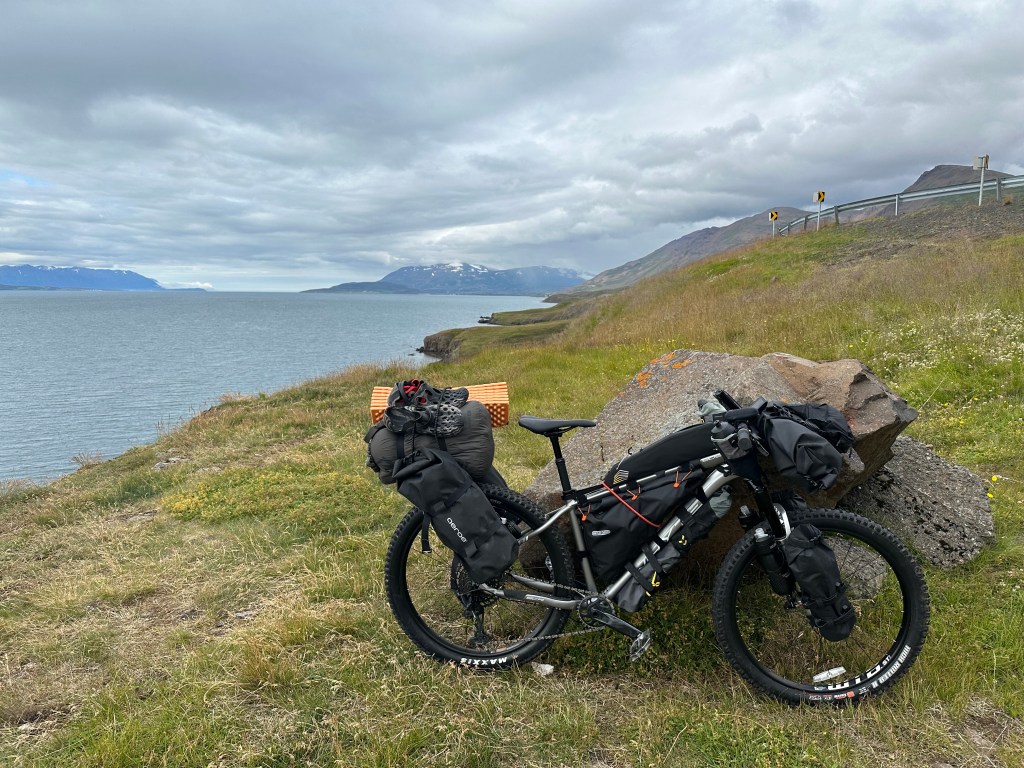
Whyte 909 v4 2022 (@whytebikes) with 27.5” wheels, 2.8” tyres and Nukeproof Horizon Pro pedals. Considering the sand and lava fields we crossed, this was probably the most consequential decision during planning. There are other cyclists that used gravel bikes and/or smaller tyres for the Divide, but considering the amount of stuff we were carrying, both of those alternatives would have been challenging. In terms of skills required for such trip, I would say someone more skilful that us, might risk it with a gravel bike and with much fewer things carrying with them. I could not have been any happier with my bike which I bought specifically for this trip. Incredibly versatile and considering I went over the limit with regards how much weight I could carry on it, it held up very well. Sometimes I would worry with all the stuff rattling coming down hard on some massive rocks, but it was awesome. One thing to point out. We were also incredibly lucky with the weather. If we had rainier and windier days for which Iceland has a reputation for, the challenges would have been even more pronounced with a faster bike.
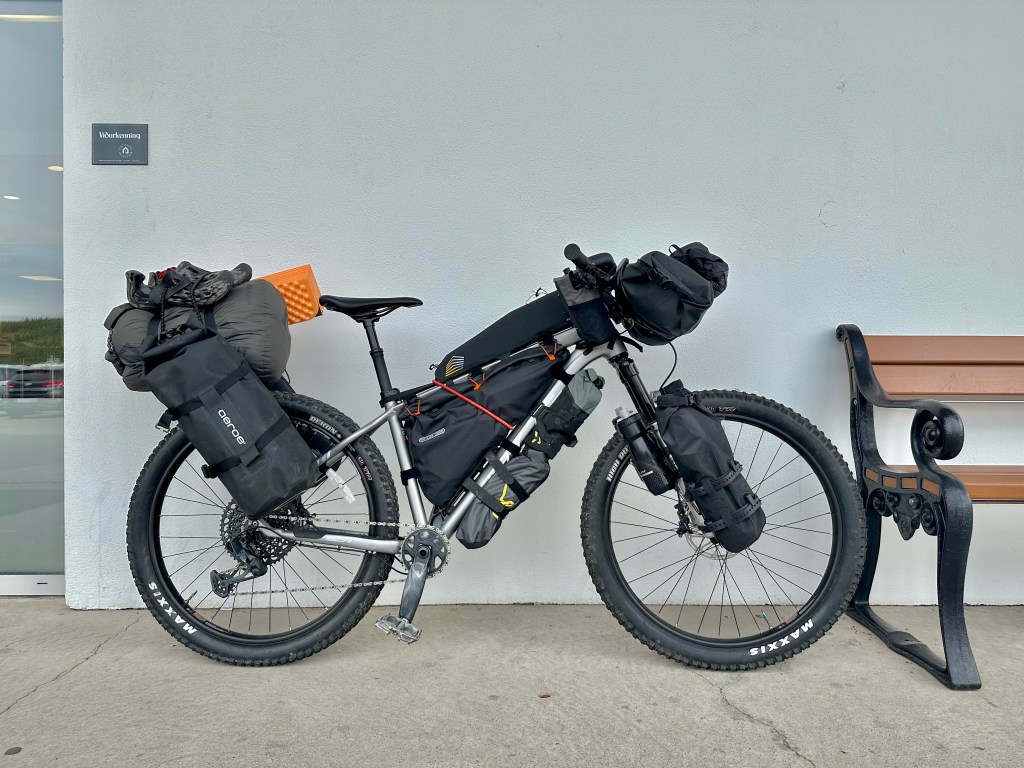
Aeroe Spider Rear Rack (@aeroebikepack) with 2 x 12L Aeroe Heavy duty dry bags on either side, with 3 cradles overall. Josh opted for the Tailfin pannier system, but I really liked the Aeroe spider rack and indeed turned out to be unbelievably versatile and robust. It took me some time to get the right angle for the middle cradle, considering I was loading it to the max, so eventually I opted for a massive dry bag with my clothes, and used the third heavy duty bag at the front instead. It ended up being the perfect setting which I will emulate in the future. Another advantage of the dry bag at the back was that due to its malleable nature I was able to strap all short of things on it, and keep changing the arrangement as I saw fit.
Aeroe Spider Handlebar cradle with 1 x 12L Aeroe Heavy duty bag. This arrived on the day of our departure, as there was nowhere in the UK that I could purchase one and it took ages to have it delivered, due to customs, Brexit and all that. I set it up first time in Akureyri, hence the palaver having to play around with the weight distribution in the morning of our departure. Initially I used a dry bag instead of the heavy duty, but when I changed them over, putting the dry bag at the back cradle, I hit the jackpot. It is a bit harder to keep it within the weight limit, if you end up loading it. There is a smaller bag from Aeroe (orange) that could have worked better, as they advertise it as such on the website. With the larger one, as I using it for food, and as our supplies were depleted, the bag’s shape was also harder to sustain, due to its thickness. But all was a learning curve at the end!

Tailfin Cargo Cages system (@tailfincycling) x2 with 5L Cage Pack size and Large size Cargo cage. Very pleased with this system also. Very robust all around, and once I got used to the strapping system, all went well. I do need to cut the straps smaller though! This system includes spaces for a bottle cage on both sides, but I need to find a more secure way, because I lost a bottle going down one of the more challenging hills, as Josh did also.
Apidura Expedition Downtube (@apidura) (1.2L). For the most used tools. The strap got in the way most of the times as the velcro is quite small. I have been meaning to check what other tube sizes could possibly make the strap do its job properly and stay strapped.
Apidura Expedition Fork pack (3L) was used under the downtube next to the 1.2L one. I had another one of those packs and initially had strapped them both above the downtube in the middle, and it was a nightmare to maintain their shape and unruly straps. So when I found a frame bag that fits (Ortlieb Frame-Pack), I used just one of those fork packs and placed it under the downtube along with the one that is designed for it (Expedition Downtube).
Apidura Backcountry Food pouch (1.2L) x 2 – one for snacks, the other for my bottle of water. All good. I use those all the time.
Apidura Backcountry Long Top Tube pack (1.8L). It may sounds too much, but I loved the flexibility of having a battery pack, some pills and other bits and bobs at hand and easily accessible. The smaller top tube I had, was nuisance due to its tiny size.
Ortlieb Frame-Pack RC (6L) – It was hard to find a frame bag that fits a narrow hardtail frame such as the Whyte 909’s, so I was super happy with this one when I found it! I chose the roll top version mainly to make it easier to load and off-load it. I kept all my valuables there, including all the batteries, so everything was kept very securely. The roll-top design is great to be able to reach everything in the bag quickly and remove it in bulk, albeit I kinda wanna try the zipped one as well!
Other packing gear
Matador Freerain22 Waterproof Packable Backpack. Oh my. Sometimes I worry about my OCD with regards researching to the death until I find what I am looking for, but the packable range by Matador was one of my best discoveries yet, not widely known in the UK though. It is absolutely incredible, along with the other stuff I bought from them and used in my other trips. This 22L backpack is fully waterproof and virtually indestructible, and can be packed down to this tiny bag which fits in one’s palm. I brought in as an emergency, if I need it to carry stuff in my back, and ended up carrying it 100% of the duration of our trip. Invariably, it was great to put things in there to rebalance my weight distribution around the bike, but when all the perishable things started to…, well perish, I started using it lightly, and still was useful due to how accessible my stuff were. Next time I will opt for the Beast28 Ultralight Technical Backpack due to slightly larger size and hydration compatibility. In fact, I own a few products from Matador and I absolutely love this brand, and I wanna own everything from them.
Matador Freerain Waterproof Packable Hip Pack. Initially I wasn’t sure if I needed one, but aside from using it at the airport whilst travelling, I ended up putting my Fujifilm camera in and strap it on top of the Aeroe handlebar bag. It is not designed for that of course, but it did a great job, especially considering it is waterproof. In general, I was not able to use my camera as much as I did in other trips whilst using a road bike. I felt I needed to have both hands firmly on the handlebars considering the terrain. In addition, having a bag in my back, it meant I could not use the camera strap, as I had done before.
Granite Gear Air ZippDitty I bought the entire range from this brand and then some. All of them were used for the entire organisation of my stuff that went into the bike bags. They are exceedingly robust and waterproof (although I have not actually submerge them in the water or something) and they provided me peace of mind as an additional protection for some of the electrical stuff which I kept inside the similarly waterproof bikebags.
Hydrapak Seeker 2L Bottle x 2. These were great. They are packable and makes all the difference. I did not fill both with water all the time, but when we knew we’ll be needing water for cooking, etc, it was great to have the ability to carry so much water, in addition to my 3 normal bottles. Josh also used two, plus a hydration pack carried in his backpack, something I may also consider next time!
Firepot meals. I won’t get into the detail of the meals we arranged, but considering most of them were from the compostable range it was not very convenient when we wanted to have something done quickly. Obvious, yes , I know. There were two evenings that we were so knackered that we opted not to cook at all once we had set up camp. We did have some meals in the normal yellow range, which we dully used by pouring the water in them. The compostable range would probably most suited to those with a more leisurely approach to camping!
Styrkr nutrition. We were incredibly grateful for Styrkr to provide us with their gels, energy mixes and electrolyte powders. I had actually never used energy mixes and electrolyte before and they were lifesavers in some parts of our trips!
Attire
Universal Colours range. Although I normally wear Pas Normal cycling clothing, I was very pleased with the UC range. Sigma Sports were fantastic in their generosity to sponsor us with most of the gear needed for our trip, despite this was a last minute arrangement. We literally visited them and tried on our gear on our way to the airport! The range I wore was well-fitted and comfortable, all in some amazing muted colours, as I usually don’t like wearing bright stuff.
Merrell Hydro Moc Mens Sandals. Love them! Never worn such sandals, crocks, etc before, and I had no idea I needed them in my life. We bought them with the river-crossings in mind, but used them throughout, whilst in camp, in our nights out in Reykjavik, whilst travelling, etc. They’re incredible comfy, obviously.
Hoka Speedgoat 4 GORE-TEX Trail Running Shoes. Ok, we did not do any running, thank God, but I was so happy for my choice to dust them off for the trip when I was trying to decide what to bring with me. I had only used them once before, in my only attempt to run in the forest back in Sussex, resulting to some pitiful 3-month recovery period! Stick to what you know and trained for, I suppose. These shoes are super light, very waterproof, but what really made the difference is their proprietary “megakrip” sole which was expertly latching to the “spikes” of my Nukeproof pedals (the little customary screws on MTB pedals) when I needed it the most. Adding to this, pushing the bike up the hills required some serious robustness from my shoes, and they did the job just fine. Not sure how others bikepacking with some huge and heavy boots.
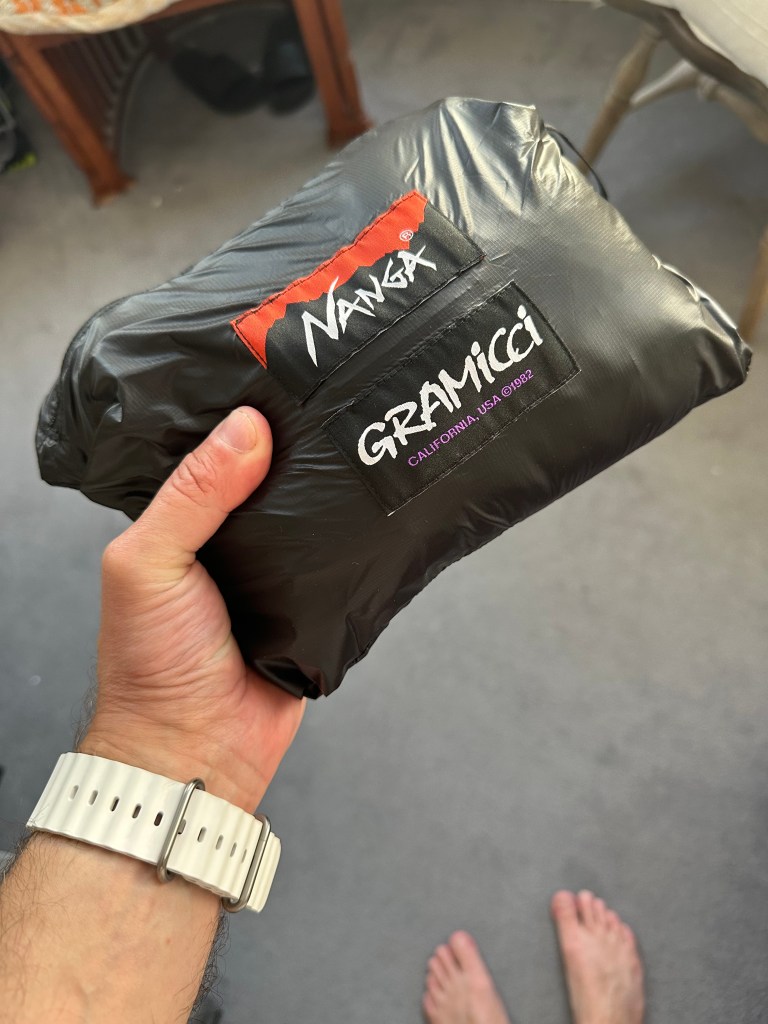
Nanga-Gramicci Down Pants. This is so great; very well deserved the money spent. There is nothing better than putting this on during the crispy mornings as we were getting up, and messing about in the camp. Some nights we felt we had to combine it with the sleeping bag due to low temperatures. This was a purchase that was made immediately after our test ride when we camped in New Forest in 7 degrees and we realised our merino wool base layers were not enough.
Camping Gear
Thermarest Hyperion 20 sleeping bag. We went for the lightest possible gear, and it paid off, especially with our sleeping bag. Ultralight and warm, as it says on the tin.
Thermarest NeoAir uberlite sleeping pad. Now, this was our least favourite product, mainly due to the practicality to set it up and lack of robustness. It was super light, I get it, but as Josh already punctured a hole on it on its very first usage in the UK, we thought it might not last much in Iceland. Looking at the other pads in their range, we could have spent similar money for something tougher and with much higher R-Value. But the practical implication of having to blow it, even with the electrical pump I brought with me, was more impactful after an exhausting day’s ride. We used it only a couple of times, and for the rest, we utilised the Exped folding Mat which is 1/10 of the price of the Thermarest (literally), and it is immediately deployable. Be that as it may, we had not experienced sub-zero temperatures that would have rendered the Exped mat useless.
Exped FlexMat M Sleeping Mat. Loved this! It was a last minute decision to buy it and had to convince Josh to follow suit. We were trying to anticipate having a break out in the wild, and wanting somewhere to sit that might not be rugged or cold, I suppose. And that was the best idea ever. Super easy to strap on top my bags, and we ended up using as a sleeping mat as well, as it is actually designed for.
MSR Hubba NX Tent. I had zero experience setting up a tent before this one, so I can’t compare it with anything. All I can say, it is an awesome piece of kit, super easy to set up even for super-easily-confused individuals such as I. We did not experience extreme weather to judge its performance, but for what we had there, it withstood it all, and we had no issues with condensation either.
Fillo Luxury Camping Pillow. I was not bothered initially to consider a proper pillow, but with Josh’s encouragement we got those, and turned out to be great idea, and well worth the (considerable) money. Due its construction it feels like a normal pillow, although you do blow some air inside, being packable and all that.
Platypus QuickDraw Microfilter & Reservoir System. Great system in terms of packability and usage. My only criticism is the screw top. It really isn’t user-friendly, especially for people with brains like mine. I ended up staring both pieces to see how I can combine them in order to turn the cap and securely tighten it. Every time I tried to do it, I was screwing it at an angle, like trying to square the circle. If it happens I am the only one experiencing this, I feel I need to reconsider my life.
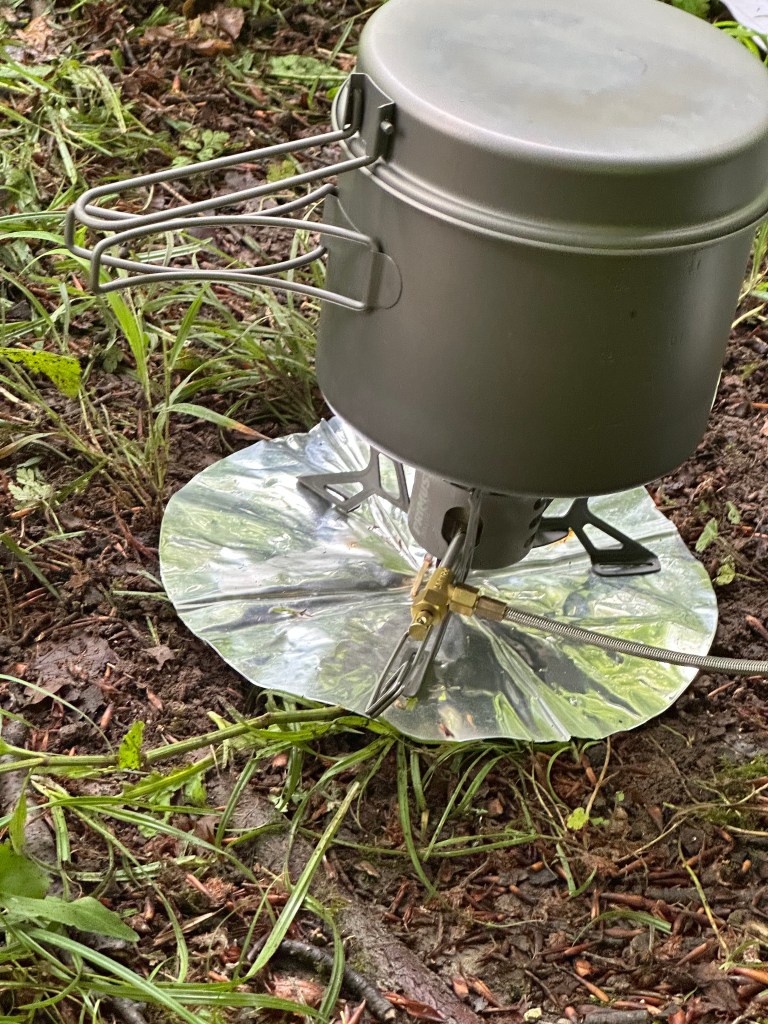
Primus OmniLite Ti Stove. We didn’t really need the absolute best and most expensive stove in the history of fucking stoves, but since we are planning to use it in other places in the world, where they may not use gas as the main fuel, or it might be super cold, we thought we should invest in the OmniLite. Awesome piece of equipment which was literally used exclusively by Josh, bar once, if I vaguely remember, and only with his supervision. I feel my life is going in circles, like my dad preventing me from playing with matches when I was a kid…sigh….
Electrical
Tribit V2. As I mentioned in the main page, I absolutely loved this little, yet mighty bluetooth speaker. It attaches very easily and securely with a rubber strap on the handlebar, and you can turn it to the preferred direction at ease. The buttons at the side were a little awkward, inasmuch I was trying to operate it en route and with gloves. I was keep forgetting what is the corresponding sound for powering off and on, when I was fiddling with its bluetooth connection.
Motorola T92 Waterproof. Great radios, yet if I could even remotely compare it with anything, I would. They did what they supposed to do, but alas, they could not polish my accent when I was trying to make jokes over the radio, which they all landed flat, invariably, by the time Josh managed to figure out what I was trying to say. They’re famous for their waterproofness and signal radius and we had no issues. Remembering to charge them was the only challenge.
Garmin InReach Mini 2. Great little device, albeit with an obligatory tiered subscription allowing you to make the most of it. We were expecting we would be utilising it much more than we ended up doing so. There were pockets of connectivity throughout our journey, meaning we were able to communicate as normal with our phones. Conversely, there were a few places that we did use it to message our families/friends us, but they got more out of it than us, by being able to track us on the Garmin website which was regularly updated with our progress (or lack thereof). Satellite signal was strong and the website support also great.
Mophie Speedport 120 travel kit: At face value, this might appear too much for bikepacking, but for trips where power sources are scarce, it’s invaluable, saving space and time. It has 3 x USB-C, 1 x USB-A and 1 x Micro-USB. I was able to charge multiple devices, which they would have all needed their individual plug-socket. I purchased one with the European plug, meaning I did not have to carry more than one adaptor.
IKO Core 500 Headlamp. This is one of those items I spent inordinate amount of research until I had settled on this one. It is invaluable for any type of touring, including the less remotes one. It is characterised by the incredible lightness and design, very minimal, and bright. My only criticism is that the battery cap should have been a better design. It takes a bit a fiddling to get it open.
Second Thoughts
In general, stuff I carried with me but I felt I did NOT need were: the Kindle, Restrap hike-a-bike-harness (more suitable for a lighter, gravel bike), 1/3 of the batteries (I brought with me in total 90,000mAh, yet probably one would need 60,000mAh, depending how many devices need charging, considering we were able to charge our stuff at Nýidalur hut and Highland Hotel), cafetiere (I would take instant coffee next time, as a cafetière is a hassle to clean, in additional to the weight), a second pot (one would be enough to boil water), whiskey flask (although I am an whiskey drinker, I really didn’t bother with it throughout our ride),
What might I consider next time? Bring more superglue, more C02 canisters, more tubes (although we were riding on tubeless, we ended up converting one of my tyre into tube-type tyre, using both of our tubes), swapping compostable food packaging with the normal ones, bring an extra mosquito head net; find an alternative solution to mounting the lights.
Also, things I might have done differently in planning process were to reach out to Nyidalur Hut and Highland Hotel to find out what supplies we could have gotten from there and factor it in to our food supplies calculations; prepare our bikes prior to our first ride, including our GPS, ready uploaded with Iceland’s maps; make time to visit Askja caldera near Dyngjufjöll mountains.
Packing list
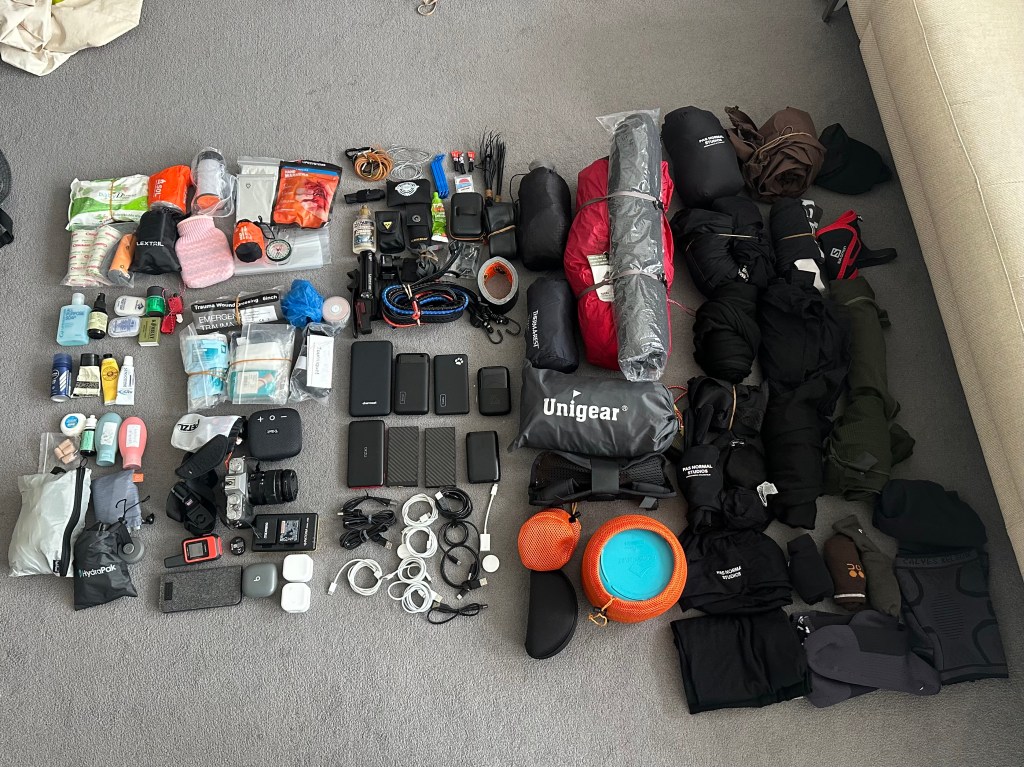
Here is a comprehensive list of the First Aid kit and tools I brought with us, having consulted various websites and blogs for inspiration. If anyone would benefit from my entire packing list, reach out and I will send you the Lighterpack link with absolutely everything.
First Aid
- Inadine Adherent Dressing
- Self-adhesive large dressing
- Roll Self-Adhering Compression wrap
- Bandage
- Large Sterile non-stick pad
- Butterfly bandages
- Plasters
- Elastoplast ointment
- Elastoplast
- Safety pins
- Medical scissors
- Tweezers
- Rennie
- Imodium
- Paracetamol
- Rehydration salts
- Ibuprofen
- Latex gloves
- Emergency foil blanket
Tools, Primary
- Ducktape
- Leatherman multitool
- Topeak multitool
- Dynaplug
- Pump with C02 inflator
- C02 canisters
- Muc-Off Gloves
- Tuff Tape
Tools, Secondary
- Blackburn multitool
- Sram Brake pads
- Bungee cords
- Sram Chain piece
- Gear cable
- Screws + chain links
- Derailleur hanger
- Tube x1
- Cable tyres
- Restart Tyre boot kit
- Elastic bands
- Carabiner clips
- Wire piece
- Superglue
- Tyre patches
- Leather needle and nylon thread
- Tubeless valves extra
- Extra Valves Cores
- Core removal tool
 tolis.blog